AI-AIDED GRAPHIC DESIGN
TUESDAYS & THURSDAYS
6 PM PT / 9 PM ET
7 MAY 2026 - 16 JUN 2026
DURATION:
6 WEEKS
TUESDAYS & THURSDAYS
6 PM PT / 9 PM ET
Don’t let AI do the thinking. Use it to expand the reach of your own creative brain.
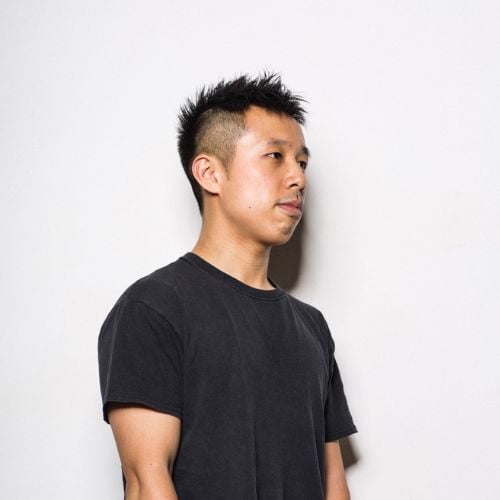
Evan Boehm, Group Creative Director at BUCK, will teach you how to leverage AI to enhance your creative and strategic skills, merging design thinking principles with advanced workflows.
THIS COURSE IS FOR YOU, IF...
-
YOU ARE A DESIGNER FEELING AI ANXIETY (AND AI FATIGUE)
You know AI isn’t going away, but right now it feels more like noise than leverage. We’ll show you how to stop fighting “good enough” outputs and start using AI as a real design multiplier. You’ll move beyond surface-level prompting, learn node-based workflows and open-source models, and regain control over speed, quality, and originality — without losing your taste or authorship.
-
YOU ARE AN ART DIRECTOR STRUGGLING WITH AI CONSISTENCY
You can get images, but not systems. Styles drift, assets clash, and “one more prompt” isn’t fixing it. This AI graphic design course teaches you how to direct AI like a creative system — setting visual rules, constraints, and logic that hold across campaigns, formats, and platforms. You’ll learn how to turn AI from a chaotic generator into a disciplined collaborator that follows your vision.
-
YOU ARE A CREATIVE DIRECTOR THINKING BEYOND VIBES
AI experiments are everywhere, but strategy is not. If you’re responsible for brand coherence, scale, and handoff, this course helps you close the gap. You’ll learn how to encode taste, intent, and standards into AI-driven workflows — building a repeatable “brand engine” your team can use without breaking the system. Less micromanagement, more leverage, better outcomes.
Our students work in 1600+ companies worldwide

This course doesn’t teach tools or “AI hacks” — it teaches how to think when tools change. You’ll learn how to build your own strategic scaffolds, world logic, and evaluative systems that let you direct AI with intent. Every session focuses on judgment, iteration, and creative control rather than memorizing prompts or chasing the latest trends.
You’ll work through tasks and demos that show how AI behaves when properly directed — and how to make it behave when it doesn’t. You’ll be comparing models, defining world logic, stress-testing visual systems across touchpoints, and practicing the decisions creative directors make when brands need consistency.
Your capstone is an AI-directed brand book. You’ll present a cohesive visual system built to survive real-world complexity. The project proves your ability to define strategy, lock visual rules, evaluate results, and scale a brand across mediums. It’s a portfolio-ready proof of how you think, direct, and decide with AI in the loop.
- Group Creative Director at BUCK · Experience & AI Lead
- Founded and scaled multiple creative business units, delivering award-winning work across design, experiential, digital, and emerging media
- Led projects featured on Netflix’s The Art of Design, earning 40+ awards across Design, Web, Mobile, Film, AR/VR, Smart Cities, and Architectural Lighting
- Partnered with leading IP owners (HBO, Supercell, BBC), global tech companies (Google, Apple, OpenAI), and public institutions (City of Montreal, State of New York)
- Drives AI adoption across a global network of 500+ designers, illustrators, and technologists, with over a decade of hands-on experimentation in ML and AI-driven art
- Led NDA-covered R&D for Meta, Google, and other tech leaders; collaborated with top AI labs including OpenAI, Anthropic, Google, and Microsoft; delivered large-scale public projects such as Google x Obama Administration Christmas Lighting
Walk through how the course is structured, what you’ll be building, and how each assignment feeds into a cohesive final project. You’ll also get a sense of how we’ll use demos, critique, and experimentation as core learning tools throughout the course.
- Meet your instructor
- Course structure
- Assignments
- Final project overview
How to work with AI as a creative director, not a prompt technician? We’ll focus on judgment, taste, and concept-setting — clarifying what AI is good at, where it falls short, and why strong ideas still matter more than tools. You’ll start using LLMs as strategic collaborators while keeping creative authority firmly human-led.
- Productive attitudes & basic understanding
- Creative critique, taste, & visual literacy
- Why concepts matter more than tools
- How to stay ahead
- Demo: Working with LLMs for strategy and creative partnership
Assignment #1: Speculative Brand Definition
Define a speculative brand or product using LLMs. Clarify what it is, who it’s for, and what makes it provocative or forward-thinking. This becomes the conceptual backbone of your entire course project.
Learn by comparison. You’ll direct multiple image models with the same intent and start seeing how differently they interpret, distort, or ignore direction. We’ll break down model behavior, talk about responsible visual research, and reflect on what makes AI direction surprisingly hard.
- Hands-on experimentation
- Closed models vs open source models
- Visual research strategies
- Group software audit
- Reflection: What makes direction difficult and what does this reveal about AI models?
- Demo: Creating with several image models to compare and critique results
Assignment #2: Model Comparison Study
Create the same visual artifact in two different image models. Compare the results and present what changed, what didn’t, and where each model struggled.
Dig into how models actually interpret direction. You’ll learn how tokens, context, and references shape behavior — and how to build scaffolds that guide intent without over-controlling outcomes. The goal is to lead with values, not rigid rules.
- What are tokens and what is context?
- How and context can be managed
- Installing values not rules
- Demo: Building a basic strategic scaffold for a brand/product with an LLM through values rather than rules
Assignment #3: Strategic Scaffold & Context Test
Build a strategic scaffold for your brand or product and test it through image generation. Document where intent lands clearly and where the model improvises.
Tackle “average AI.” We’ll unpack why so much AI output looks the same — then actively push away from defaults. You’ll define curatorial criteria, sharpen your taste, and start building an aesthetic that feels intentional rather than model-driven.
- Intra-model collapse & inter-model homogeneity
- Redirecting away from defaults
- Developing curatorial criteria
- Finding your taste
- Demo: Building something unique with image models
Let’s focus on deeper control. You’ll learn how to shape variation, consistency, and progression using references, negatives, and iteration — and how to integrate AI outputs into broader creative workflows rather than stopping at a single prompt.
- Three Level Model of AI
- Variation and consistency
- Compounding results
- Demo: Extending AI results beyond prompting
Assignment #4: Advanced Aesthetic Direction Log
Push your aesthetic system into uncomfortable territory — where AI struggles. Refine your scaffolding, track failures, and document how your direction evolves under pressure.
Explore node-based workflows as a way to manage complexity without losing flexibility. You’ll learn how to build repeatable systems that support exploration, iteration, and version control.
- On-platform workflow
- Demo: Node based workflow creation
Strong brands operate on internal logic, not just visuals. Define the rules, motifs, and tone that hold a world together — using text and image together to create consistency that scales.
- Rules, motifs, & tone
- Crafting advanced image references
- Demo: Combining strategic text and image references to lock in a brand
Assignment #5: World System v1: Core Visual References
Build a first version of your brand world by creating 5–10 key visuals that act as guiding references for future outputs.
Once you have volume, you need judgment. We’ll focus on evaluating large sets of outputs, identifying patterns, and turning taste into clear, repeatable criteria for what belongs in your system.
- Codifying patterns
- Building your own evals
- Demo: Defining evaluation criteria for a brand system
Here we stress-test your system. You’ll apply your brand world across different mediums, observe where it holds and where it breaks, and document how the system adapts without losing its core identity.
- Applying worlds across mediums
- Pressure-testing coherence
- Translation, not repetition
- Demo: Stress tests: Take the system and use it in other contexts and mediums
Assignment #6: Multi-Touchpoint Stress Test
Create 6–8 brand touchpoints across digital and physical mediums. Analyze what holds, what breaks, and refine your system guidelines based on what you learn.
Turn direction into infrastructure. You’ll systematize your process into scalable pipelines that maintain quality — even when shared with collaborators or non-designers.
- From outputs to pipelines
- Iteration and polish at scale
- Managing consistency at volume
- Demo: Building “Skills” in Claude or ChatGPT that can be passed from designer to non designer to hold a brand in place
We explore emerging tools, open-source ecosystems, and lightweight tool creation — alongside practical career guidance for positioning yourself in AI-directed creative work.
- Career guidance
- Open vs. closed source tools
- Vibe coding for non coders
- Demo: Google AI Studio (Gemini) demonstration of building a microtool to help with image creation
Final Project: Speculative Brand World: AI-Directed Brand Book
Deliver a 12–18 slide brand book covering brand concept, visual system rules, multi-touchpoint applications, and an AI Context Appendix that documents how AI should be directed, constrained, and evaluated.
Let’s wrap up with presentations and critique. You’ll present your brand world, defend your system logic, and get feedback on coherence, adaptability, and clarity — all grounded in the idea that concepts outlast tools.
- Full-class critique of sample worlds
- Small-group system presentations
- Defending design decisions
- Evaluating coherence and flexibility
- Revisiting “concepts over tools”
- Planning for future tool shifts
What our students say
"I really enjoy the format of the course. Lectures with real life examples and an ongoing case study. Also built in 20 minutes at the end of each class for questions is helpful."
"Overall I'm impressed with the level of detail and explanation around particular topics and subjects. There's a real depth to each module which for learning allows the information to stay in your brain."
"The group activities, they allow us to interact and exchange ideas, plus the way it is structured is challenging and mind twisting as we collaborate in different parts of the ideation."
"I enjoyed the structure of the class. I like how we learned about a topic and practiced it in the workshops. It’s helped me to apply what I learned!"